+86 186 3170 8948
+86 186 3170 8948

Water treatment facilities rely on proper wafer butterfly valve selection to ensure system reliability. Operators face challenges such as sealing issues, pressure limitations, and particulate susceptibility. Facility managers should prioritize high performance valves, consider the differences between wafer butterfly valves and gate valves, and match each valve to the specific application.
Material compatibility stands as a primary factor in wafer butterfly valve selection. Engineers must match the valve material to the chemical properties of the fluid and the operating environment. Common materials for these valves include stainless steel, ductile iron, and plastics such as PVC, PP, and PVDF. Each material offers unique advantages:
Stainless steel resists corrosion and handles a wide temperature range.
Ductile iron provides strength and durability at a reasonable cost.
PVC excels in chemical resistance and offers a cost-effective solution for many water treatment applications.
The selection process should consider corrosion rates, as corrosion remains the leading cause of valve failure. The table below compares the critical stress intensity factors of common alloys in water treatment environments:
Alloy | SCC Environment | Critical Stress Intensity Factor (MN/m3/2) | Critical Stress Intensity Factor Due to SCC (MN/m3/2) |
|---|---|---|---|
13Cr Steel | 3% NaCl | 60 | 12 |
18Cr-8Ni | 42% MgCl2 | 200 | 10 |
Cu-30Zn | NH4OH (pH 7) | 200 | 1 |
Al-3Mg-7Zn | Aqueous Halides | 25 | 5 |
Ti-6Al-1V | 0.6 M KCI | 60 | 20 |
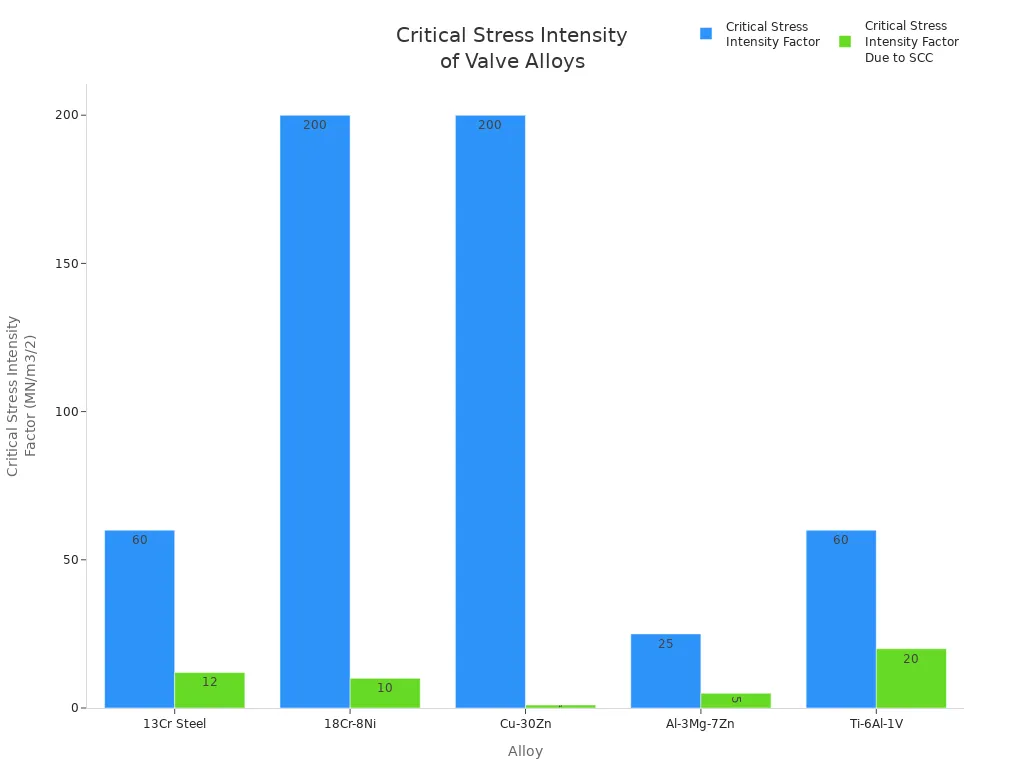
Selecting the best wafer butterfly valve material reduces the risk of corrosion, erosion, and mechanical wear. Proper selection prevents premature failures and ensures long-term reliability.
Sealing performance directly impacts system safety and efficiency. The best wafer butterfly valve uses advanced sealing technologies to prevent leakage. Engineers can choose from several sealing options:
Soft sealing uses rubber or PTFE, ideal for low-pressure environments. Nitrile rubber works well with petroleum-based media, while EPDM resists ozone and UV.
Hard sealing suits high temperature and pressure, providing robust protection in demanding systems.
Composite sealing combines both methods for versatile applications.
A high-quality seal prevents water loss, protects equipment, and maintains process integrity. Proper sealing also supports compliance with industry standards and safety regulations.
Operational requirements shape wafer butterfly valve selection. These valves typically serve low to medium pressure systems and excel in high-capacity flow applications. Water treatment plants often use them in distribution systems that require large flow rates. Key operational features include:
Quarter-turn mechanism for rapid operation.
Compatibility with actuation for remote control and automation.
Fast response time for timely adjustments.
Feature | Benefit |
|---|---|
Quarter-turn mechanism | Enables rapid operation, suitable for automated systems requiring quick adjustments. |
Compatibility with actuation | Facilitates remote control and process automation, enhancing operational efficiency. |
Speed of response | Provides near-instantaneous control, critical for timely responses in water treatment. |
Automation improves operational efficiency and allows for precise control of water flow and pressure. Selecting the right valve ensures reliable performance and supports modern process requirements.
Maintenance and longevity play a crucial role in overall operational costs. The best wafer butterfly valve offers extended service life and reduces the need for frequent maintenance. Proper valve selection minimizes unexpected failures, lowers labor costs, and prevents production losses. The table below highlights the impact of valve longevity on operational costs:
Aspect | Impact on Costs |
|---|---|
Maintenance Frequency | Reduced due to longer lifespan |
Unexpected Failures | Prevented, leading to cost savings |
Total Cost of Ownership | Lowered with high-quality valves |
Labor Costs | Decreased with extended maintenance cycles |
Production Losses | Minimized by reducing shutdowns |
Regular maintenance extends asset lifespan and maintains system performance. Facility managers should prioritize valves that offer durability and easy maintenance to optimize resource utilization and ensure continuous operation.
Facility managers often compare standard and high-performance wafer butterfly valves during wafer butterfly valve selection. The table below highlights the main differences:
Feature | Standard Butterfly Valve | High-Performance Butterfly Valve |
|---|---|---|
Design | Single eccentric or centerline design | Double-eccentric and triple-eccentric design |
Material | Typically made of cast iron and ordinary rubber | Made of stainless steel and carbon steel |
Service Life | Shorter due to simpler design and materials | Longer due to advanced design and materials |
Suitability for Conditions | Suitable for low pressure and temperature | Suitable for high pressure, high temperature, and corrosive environments |
High-performance wafer butterfly valves handle high volumes of water efficiently. Their robust design improves reliability and durability in water treatment applications. Advanced sealing technologies minimize leakage and maintenance, making them ideal for demanding treatment environments.
Engineers must consider application-specific features during wafer butterfly valve selection. Important factors include:
Medium type: Materials must match the fluid to prevent wear and leakage.
Pressure: The valve's rated pressure class must meet the system's maximum operating pressure.
Temperature: Valve materials must withstand system conditions.
Shut-off class: The correct seat design ensures proper shut-off.
Valves in wastewater treatment facilities require corrosion resistance and the ability to handle abrasive materials. These features maintain efficiency and reduce costs by lowering maintenance and energy consumption.
Wafer butterfly valve selection depends on the type of water being treated. Wafer butterfly valves offer compact and cost-effective options for water supply and raw water treatment. EPDM seat material works best for standard raw water conditions. Wear-resistant seats such as PU suit environments with increased abrasion. Metal-seated solutions are recommended for extremely abrasive conditions.
In process water and wastewater treatment, corrosion-resistant designs are essential. These valves isolate and control flow in pipelines. Their compact design saves space and reduces installation costs. Quick quarter-turn operation and reliable sealing with elastomeric liners enhance operational efficiency.
Yaxing Valve provides versatile sealing options, including soft-seated and metal-seated designs. Multiple actuation methods allow manual, electric, pneumatic, or hydraulic operation. Robust structural designs, such as centerline, double offset, and triple offset configurations, enhance lifespan and sealing performance. Yaxing Valve products address common challenges in water treatment, such as leakage and rust, by employing advanced technology for reliable sealing and long service life.
Facility managers benefit from Yaxing Valve's commitment to quality and innovation, ensuring the best wafer butterfly valve selection for every water treatment application.
Facility managers should follow these steps for optimal wafer butterfly valve selection:
Inspect valves before installation.
Align pipes correctly.
Use manufacturer-recommended gaskets.
Key benefits include compact design, quick operation, and low maintenance. Yaxing Valve offers reliable products with complete material test reports and strict quality control.
Aspect | Description |
|---|---|
Material Test Reports | Provided for all critical parts |
Quality Control | Ensures consistency from raw materials to finished valves |
Wafer butterfly valves offer a compact design. They allow quick installation and easy maintenance. Facility managers save space and reduce downtime with these valves.
Yaxing Valve uses strict quality control. They provide material test reports for all critical parts. This process ensures consistent performance and reliability.
Yes. Wafer butterfly valves from Yaxing Valve support electric, pneumatic, and hydraulic actuators. Automation improves process control and increases operational efficiency.
Related Information
Inside a Ball Check Valve: Structure, Materials, and Why It Matters
In Which Applications Are Resilient Seated Gate Valves Used?
What to Know Before Requesting a Quote from Wafer Butterfly Valve Manufacturers
Check Valves 101: Types, Uses, and How to Pick the Right One
Comparing EPDM and NBR Butterfly Valve Seats for Chlorinated Water in 2026
Differences Between Resilient Seated Gate Valve DIN3352 F4 and DIN3352 F5
Let Us Create Durable and High-Quality Wastewater Treatment Solutions
Expert Advice on Wafer Butterfly Valve Selection for Water Treatment Facilities
Wastewater Collection Systems: Process, System Types, Stormwater Handling, and Valve Solutions
Wafer Butterfly Valve Installation Guide | Step-by-Step Instructions & Expert Tips
The Role of Resilient Seated Gate Valves in Wastewater Treatment
Understanding the Difference Between Lug and Wafer Butterfly Valves
Butterfly Valves Types and Different Butterfly Valve Classifications

+86 186 3170 8948
No.4 Road Botou Industrial Zone, Cangzhou City Hebei Province, China
Get Free Sample
 Privacy Policy