+86 186 3170 8948
+86 186 3170 8948

Industry News
Feb. 05, 2026
An effective valve selection process is crucial for any project's success. Project managers must evaluate potential water valve manufacturers carefully. A key step involves checking product quality. This includes reviewing material specifications and ensuring the valve adheres to industry standards. Reputable suppliers provide complete material test reports for all critical parts. Their quality control procedures guarantee consistency from raw materials to the finished product.
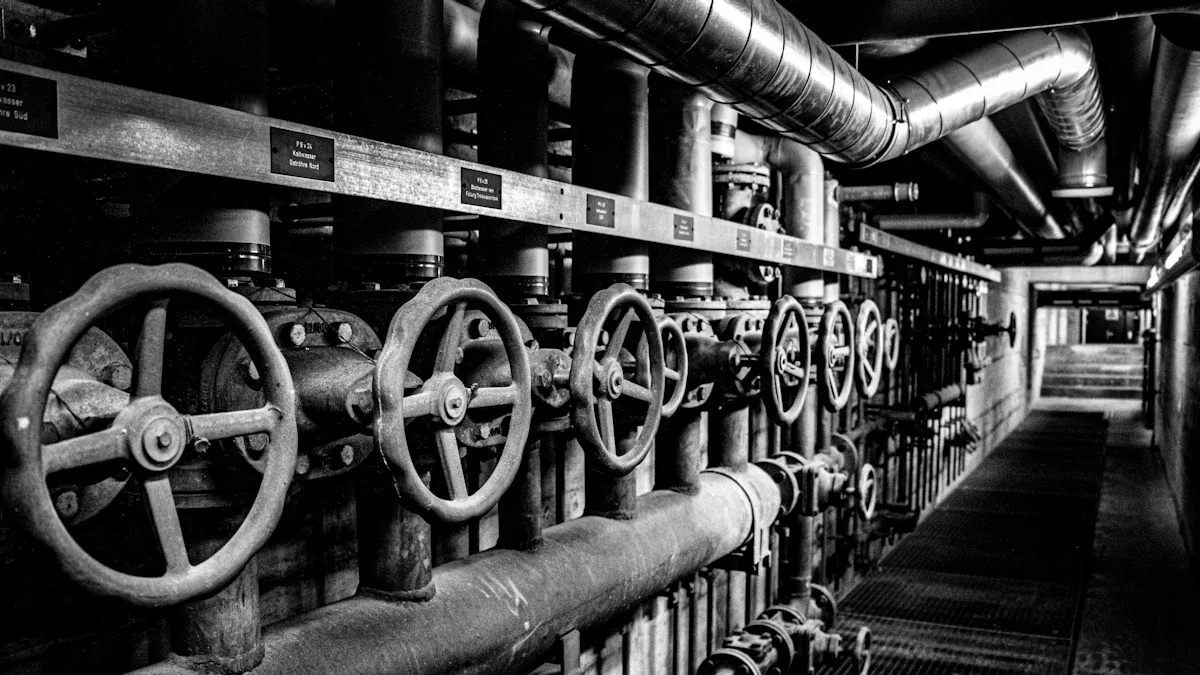
A valve's reliability begins with its raw materials. Project managers should scrutinize a manufacturer's commitment to quality at this fundamental level. Superior materials and transparent processes ensure long-term performance and operational safety.
Top-tier water valve manufacturers provide complete material traceability. They use durable metals like carbon steel and stainless steel for valve bodies. For popular valve types such as high-performance butterfly valves, they often use PTFE for seats to prevent leaks. Every critical component should come with a Material Test Report (MTR).
What is an MTR? A Material Test Report is a certified record that documents a material's specific properties. It includes:
Heat Number: A unique code that traces the material back to its original batch.
Chemical Analysis: A breakdown of the material's elemental composition.
Physical Properties: Results from tests for tensile strength and hardness.
This documentation proves the material meets project specifications. Manufacturers achieve traceability by marking each valve component with a heat code and using digital systems to track parts from raw material to final assembly.
A manufacturer’s quality control (QC) system reveals its dedication to excellence. The QC process should cover every stage, from material inspection to final testing. A key stage is hydrostatic testing. During this test, technicians fill the valve with fluid and apply pressure to confirm its structural integrity. This procedure verifies that the valve can handle its designated operational pressure without leaking, which is essential for proper valve function and system safety.
Reputable manufacturers for industrial valves conduct extensive testing to guarantee correct valve function. They use several non-destructive testing (NDT) methods to inspect components for hidden flaws. Common NDT methods include:
Radiographic Testing (RT): Uses X-rays to find defects inside castings.
Ultrasonic Testing (UT): Uses sound waves to detect flaws in forgings and welds.
Positive Material Identification (PMI): Verifies the chemical composition of metal parts.
These tests confirm that every valve meets strict standards for managing flow and pressure, ensuring reliable and safe operation in the field.
Certifications provide objective proof of a manufacturer's commitment to quality, safety, and reliability. Project managers should verify these credentials to ensure a valve meets all necessary legal and technical requirements for its intended application.
A manufacturer's adherence to ISO 9001:2015 demonstrates a robust quality management system (QMS). This standard ensures consistent processes and a focus on continuous improvement. The core requirements follow a Plan-Do-Check-Act cycle. This model helps organize change and improve quality management. Key requirements include:
Context of the Organization: Defines the business environment.
Leadership: Outlines top management's responsibilities.
Planning: Focuses on risk management and setting targets.
Support: Covers resources, training, and communication.
Operation: Sets requirements for design, production, and testing.
Performance Evaluation: Involves measuring and reviewing the QMS.
Improvement: Requires identifying opportunities for improvement.
For applications involving drinking water, compliance with NSF/ANSI 61 is critical. This standard ensures that valve components will not leach harmful contaminants into the water supply. Reputable water valve manufacturers provide documentation confirming their products meet these stringent health and safety regulations. This certification is essential for public works projects and any system handling potable water.
Manufacturers must also comply with regional standards for market access. Certifications like CE marking and UL listing are crucial for global projects. These credentials are not interchangeable. Each one addresses specific regional requirements for product safety and performance.
CE vs. UL at a Glance A CE mark is a legal requirement for many products sold in Europe. A UL listing is a widely recognized but often voluntary standard in the United States.
Certification | Focus Area | Applicable Regions |
|---|---|---|
CE | Health, safety, environment | Europe |
UL | Safety (electrical & fire) | U.S. |
These certifications act as a "passport" for a valve, allowing it to enter European or North American markets without additional testing. This simplifies logistics and confirms compliance with local regulations.
ISO 9001 shows a strong quality management system. For drinking water, NSF/ANSI 61 is critical. This standard ensures valve materials will not leach harmful contaminants. Project managers must verify these certifications to guarantee safety and compliance for their application.
An MTR provides certified proof of a material's quality and origin. It details the chemical composition and physical strength of valve components. This document confirms the materials meet project specifications and ensures the valve's structural integrity and reliability.
Custom engineering provides tailored solutions for unique operational challenges. Engineers can modify a valve design to meet specific flow, pressure, or space requirements. This capability ensures optimal performance where standard products may not be suitable for the system.
The project manager should contact the manufacturer's after-sales support team. A responsive service department offers technical assistance to diagnose the issue. They can dispatch technicians for on-site repairs or guide maintenance teams, helping to resolve the problem quickly.
Previous post
Botou Yaxing Fluid Equipment Co., Ltd. specializes in providing design, development, and manufacturing services for the water valve industry. We produce high-quality valve products.

+86 186 3170 8948
No.4 Road Botou Industrial Zone, Cangzhou City Hebei Province, China
Get Free Sample
 Privacy Policy