+86 186 3170 8948
+86 186 3170 8948

Knowledge
Jan. 14, 2026
The gate valve vs ball valve decision is crucial for many industrial applications. A ball valve provides quick shut-off and superior sealing, making it a top choice for controlling fluid flow. In contrast, a gate valve offers an unobstructed path for flow, ideal for specific shut-off applications. The market reflects these distinct uses for the two valves.
Gate Valves: These valves represent 24% of installations, mainly in water industries.
Ball Valves: This valve type dominates with over 52.5 million units sold in 2023, favored for its minimal leakage.
Choosing the correct valve ensures system efficiency and reliability.
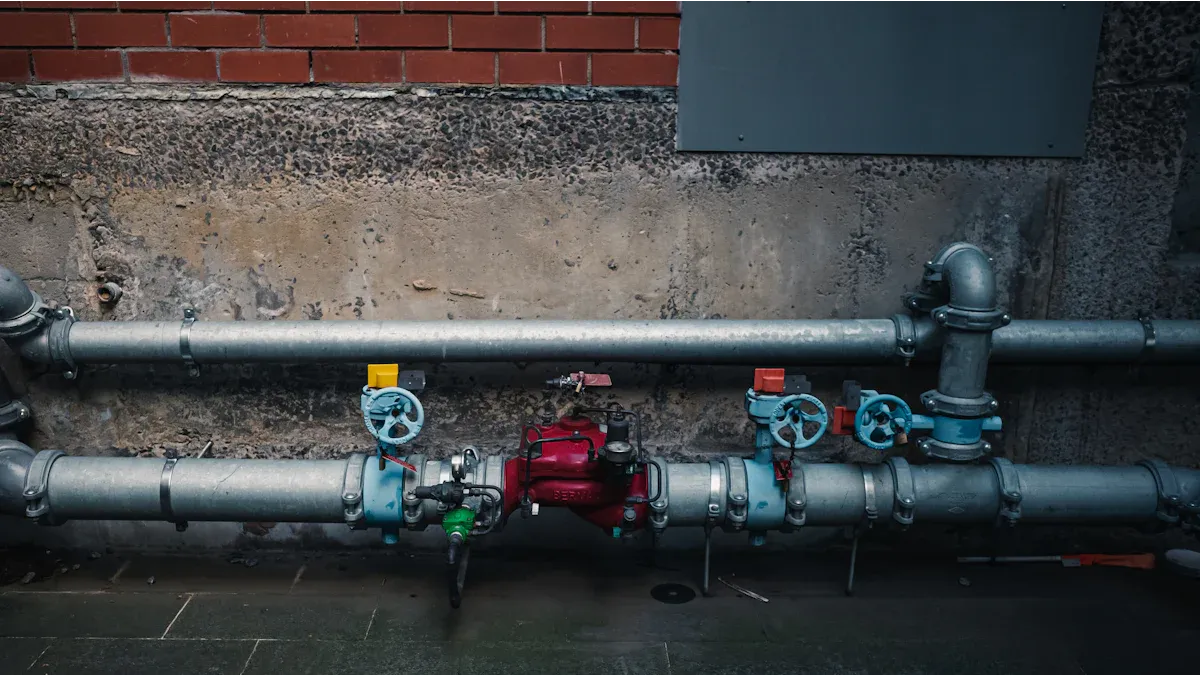
Choosing between these two popular valves requires a direct comparison of their core functionalities. The gate valve vs ball valve decision often comes down to balancing speed, sealing, and flow characteristics. Each design offers distinct advantages and disadvantages that make it suitable for specific operational demands.
The most immediate difference between these valves is their method of operation. A ball valve operates with a quick quarter-turn (90-degree) motion. This allows an operator to move the valve from fully open to fully closed almost instantly. This rapid action is ideal for emergency shut-off and for processes that require frequent cycling.
In contrast, a gate valve uses a multi-turn handwheel. An operator must rotate the wheel several times to slowly raise or lower the internal gate. This deliberate, slow operation helps prevent water hammer in large pipelines but makes the valve unsuitable for applications needing quick flow control. The choice between these two types of control is a primary consideration for system designers.
When it comes to preventing leaks, ball valves generally provide superior performance. The design of a ball valve, with its rotating ball pressing against soft seats (like PTFE), creates an exceptionally tight seal. This rotational action also has a self-wiping effect, clearing debris from the sealing surface with each cycle.
Industry standards, such as API 598, define what constitutes an acceptable seal. For soft-seated valves, the standard demands "zero leakage," often called a bubble-tight shutoff. Ball valves consistently meet this stringent requirement. Metal-seated valves, including most gate valves, have a permissible leakage allowance because a perfect metal-to-metal seal is difficult to achieve. The allowable leakage increases with the size of the valve.
The testing protocols highlight this difference in sealing capability.
Test Type | Key Parameters & Notes | Soft Seat Performance | Metal Seat Performance |
|---|---|---|---|
Low-Pressure Closure (Pneumatic) | Pressure: 80 psig (approx 6 bar). Medium: Air / Gas. | No Bubbles (0 leakage) | Measured in bubbles/min |
High-Pressure Closure (Hydrostatic) | Pressure: 1.1 × CWP. Medium: Water. | Zero Drops | Measured in drops/min |
Furthermore, the type of fluid in the system affects sealing reliability. A gate valve's performance can degrade significantly with certain media.
Problematic Media for Gate Valves ⚠️
Abrasive Slurries: Particles can get trapped in the gate guides, preventing the valve from closing completely.
Crystallizing Fluids: Media like brine can form crystals that cause the gate to seize.
High-Viscosity Fluids: Thick substances like heavy oil can make the gate difficult to move, requiring excessive force.
In these scenarios, the simple and robust sealing mechanism of a ball valve often proves more reliable for flow control.
The primary advantage of a gate valve becomes clear when discussing flow. When fully open, a gate valve provides a completely straight and unobstructed path for fluid. The gate retracts entirely out of the flow stream, creating a passage that is the same diameter as the connecting pipe. This design results in minimal friction loss and negligible pressure drop, which is critical for maintaining system efficiency in large-bore pipelines.
This unobstructed path makes certain gate valves ideal for pipelines that require pigging—a process where a device (a "pig") is sent through the line to clean or inspect it.
A through-conduit gate valve is specifically engineered for this purpose. Its design features a solid gate with a circular opening that perfectly aligns with the pipe's diameter when open. This creates a smooth, continuous bore with no cavities, allowing pigs to pass through without getting stuck.
While a full-port ball valve also offers very low flow restriction, the perfectly smooth and cavity-free passage of a through-conduit gate valve is often preferred for critical pigging operations. This specific feature is a key factor in the gate valve vs ball valve selection for midstream oil and gas applications where pipeline integrity and flow control are paramount. The ability to control flow with minimal disruption is a defining strength of these valves.
The long-term reliability of a valve depends heavily on its design, materials, and application. Ball valves generally offer higher durability in applications that require frequent operation. Their simple quarter-turn motion and self-wiping action reduce wear on the sealing components. Gate valves, designed for infrequent use, can suffer from premature wear if operated improperly.
High-cycle environments expose the distinct failure modes of these valves. The following table outlines common issues engineers encounter.
Valve Type | Common Failure Modes in High-Cycle Applications |
|---|---|
Gate Valves | - Increased susceptibility to corrosion, requiring regular replacement or maintenance. |
Ball Valves | - Valve seal failure, especially in high-cycle or high-pressure applications. |
Maintenance procedures also differ significantly between the two valves. A gate valve's stem packing often needs more attention than the seals in a ball valve.
Gate Valve Stem Packing: This component requires periodic adjustment, typically every 2-3 years, to prevent leaks. If minor leaks appear, an operator can carefully tighten the packing gland nuts. Persistent leaks or hardened packing material signal the need for a full replacement.
Ball Valve Stem Seals: These seals are generally more durable, lasting 5-7 years with less frequent need for adjustment compared to gate valve packing.
Troubleshooting leaks is a common maintenance task for both types of valves. The approach depends on the valve's design.
Troubleshooting Seat Leakage
Previous post
Botou Yaxing Fluid Equipment Co., Ltd. specializes in providing design, development, and manufacturing services for the water valve industry. We produce high-quality valve products.

+86 186 3170 8948
No.4 Road Botou Industrial Zone, Cangzhou City Hebei Province, China
Get Free Sample
 Privacy Policy